What a birth chart actually is
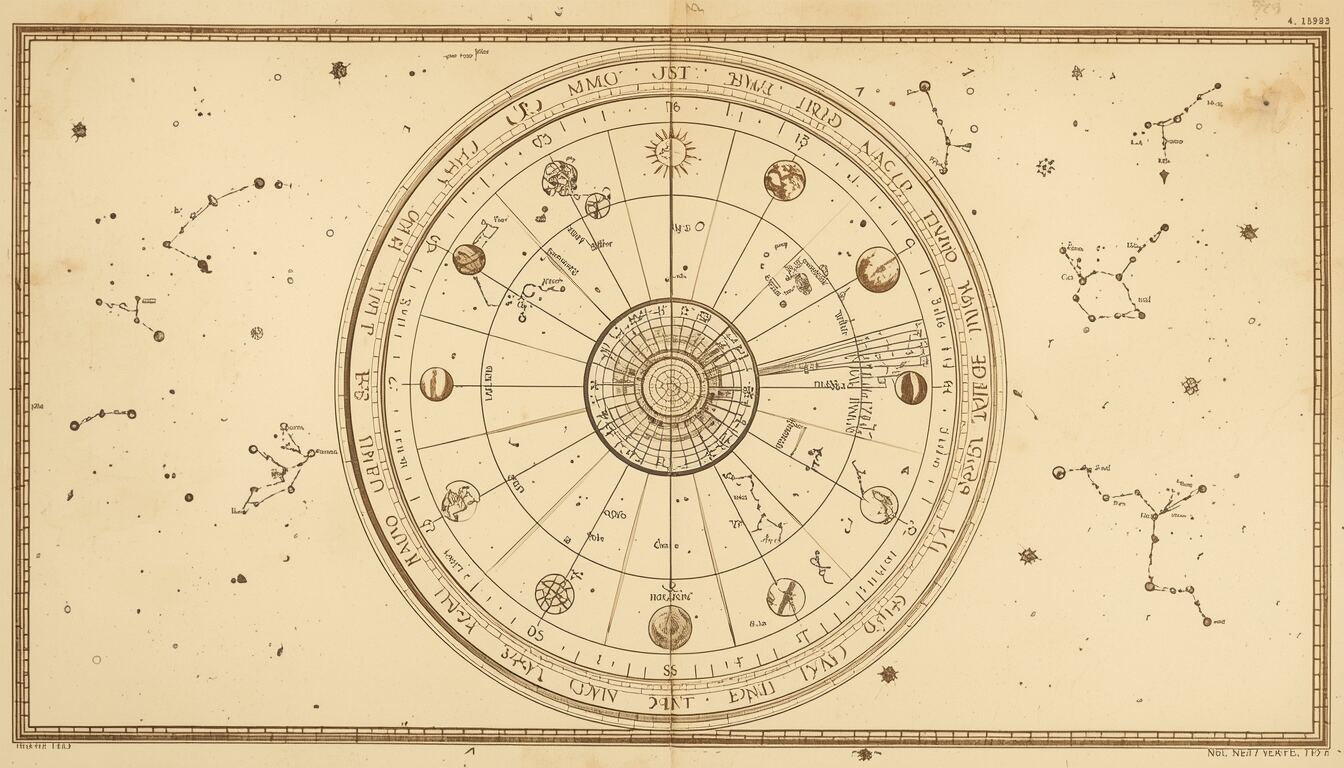
Whatever you think astrology is for, a birth chart is a specific, mechanical thing: a map of where the planets sat, from where you were standing, at the moment you were born. Here is what the parts mean.
Three things, not one
Most people know their sun sign. A chart has three headline positions and they do different jobs. The sun is where the sun sat in the zodiac that day — it changes monthly, which is why everyone knows theirs.
The moon moves through a sign roughly every two and a half days. The rising sign, or ascendant, is the sign coming over the eastern horizon at your moment of birth — it changes about every two hours, which is why it needs an accurate birth time and why charts drawn without one are missing a third of the structure.
Houses are the stage, planets are the actors
The chart is divided into twelve houses, each traditionally covering an area of life — the first is self and appearance, the seventh partnership, the tenth career and public standing. The houses are anchored to your birth time and location, not the date.
A planet in a house is read as that energy showing up in that department. The same Mars sits very differently in the sixth house than the twelfth.
Aspects are the angles between them
Aspects are the geometric relationships: a conjunction is two planets in roughly the same spot, an opposition is 180 degrees apart, a trine 120, a square 90. Trines are read as easy, squares as friction.
This is where chart reading stops being lookup and starts being interpretation — and where two competent astrologers will happily disagree.
Said honestly
There is no established physical mechanism by which planetary positions influence personality, and controlled studies have not found one. What a chart is genuinely good at is giving structured language for self-reflection — a set of prompts specific enough to be interesting.
Read it as a mirror rather than a forecast and it holds up much better.
What you could build here
Three directions that would work on this name. None of them is the only answer — it is your name once it is yours.
- A free chart calculator. The maths is well documented and open ephemeris libraries exist. Free tool, paid interpretations — a proven model in this market.
- A learning path. Most astrology content assumes you already know the vocabulary. A genuine beginner's course would rank for a thousand long-tail queries.
- An app's front door. Astrology apps are a large consumer category with real subscription revenue, and this name says exactly what the app does.
Related tools
- NumeroscopeNumerology for reflection, not prophecy
- Astro.comFree accurate chart calculation, the serious one
What it could look like
A sample concept, built to show the name in use. It is a starting point, not a business that exists.
This domain is for sale
- 2019-04-12registered
- 7 yearsage
- COMextension
- Cleannever spammed
Exact-match in one of the highest-traffic evergreen consumer niches online. Astrology apps are a real market and the keyword intent here is unambiguous.